
MPART releases results of PFAS test comparability study
CADILLAC — Study findings released Thursday show that testing methods used by the Michigan PFAS Action Response Team and the private company, Cyclopure, produce comparable results.
The study was conducted in response to discrepancies in test results that were noted earlier this year.
Cyclopure tests showed four instances of PFAS levels exceeding state drinking water standards in Cadillac-area drinking wells, while MPART tests showed non-detect in those locations.
In the comparability study, 20 wells were sampled by three different testers — MPART, Cyclopure and another company, AECOM. All four of the locations where discrepancies occurred were contacted to be retested but only two submitted to it.
In the two locations where discrepancies previously were found, samples taken by all three testers showed non-detect.
MPART Executive Director Abigail Hendershott told the Cadillac News it is uncertain at this time why the discrepancies between test methods occurred earlier this year, although a number of variables could have impacted the results of the tests
“It is important to note that the four samples in question were taken on different dates and times, by different samplers (e.g., the homeowners), and at a different location (at indoor faucets instead of outside spigots),” the study report states. “This study attempted to eliminate as many of these variables as possible.”
In the other 18 wells that were tested, results between the three testers also showed “good comparability” and were “typically within a few parts per trillion of one another,” according to the report.
The report also notes that one of the locations where a discrepancy occurred was near Boon and there was concern that contamination could have been caused by the application of biosolids on nearby crop fields.
That was one of the two locations that did submit to resampling and all three testers came back with non-detect results.
Stephanie Kammer, emerging pollutants section manager for the Department of Environment, Great Lakes and Energy, told the Cadillac News that based on those results, they are confident that biosolids are not contributing to groundwater PFAS contamination in that area.
There was one anomaly that arose during testing.
At one location, both inside faucets and outside spigots were tested and PFAS was detected at levels exceeding drinking water standards outside but not inside.
Hendershott said they’re not sure why there was a difference, although she added that the property owner indicated they were experiencing some kind of plumbing issue at the time, which may have something to do with inconsistency.
One of the 20 locations tested showed PFOA present at 36 parts per trillion, which is several times higher than the state drinking water standard.
While exact addresses have been omitted in the report for privacy considerations, Hendershott said this well was part of a commercial property within the Plett Road investigation area.
This is an area of town that has shown a number of PFAS detections in a pattern that is more consistent than other places, although Hendershott said given the mix of activities in the area that could potentially be contributing to contamination, they don’t know exactly where it’s coming from.
Hendershott said while MPART is no longer looking for PFAS sources in the area, EGLE will continue to sample monitoring wells around Plett Road to collect more information.
The full report is available with this article at cadillacnews.com.
• The results of a study released Thursday show testing methods employed by the Michigan PFAS Action Response Team, Cyclopure and AECOM produced similar contamination readings.
• The study was done in response to discrepancies in MPART and Cyclopure test results earlier in the year. Retesting at two of the four locations where discrepancies were found showed non-detect levels of PFAS.
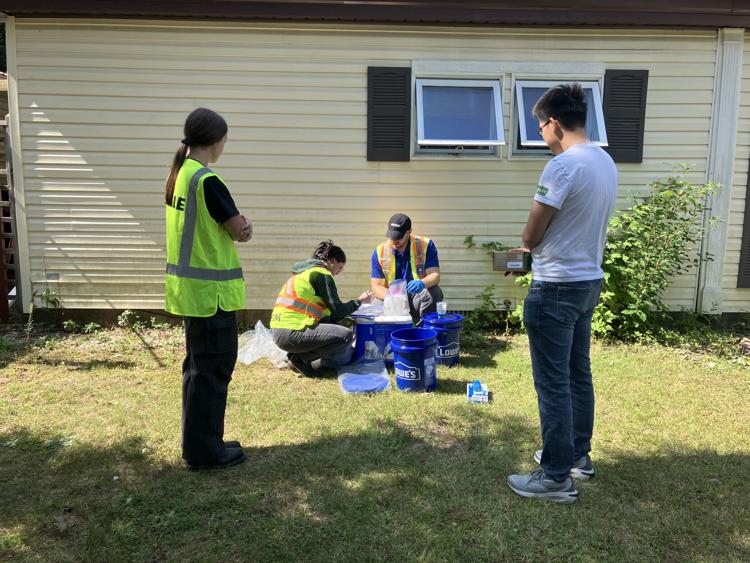
Pictured from left are MPART Departmental Analyst Miranda Triolet, AECOM representatives Jim Buzzell and Vivian Spencer, and Cyclopure representative Hoang Le. In the summer, MPART, Cyclopure and AECOM took water samples from 20 homes in the Cadillac area as part of a PFAS test comparability study.
Chris Lamphere | Cadillac news