
Following PFAS Through a Watershed
How does PFAS move through a watershed before it reaches a drinking water supply?
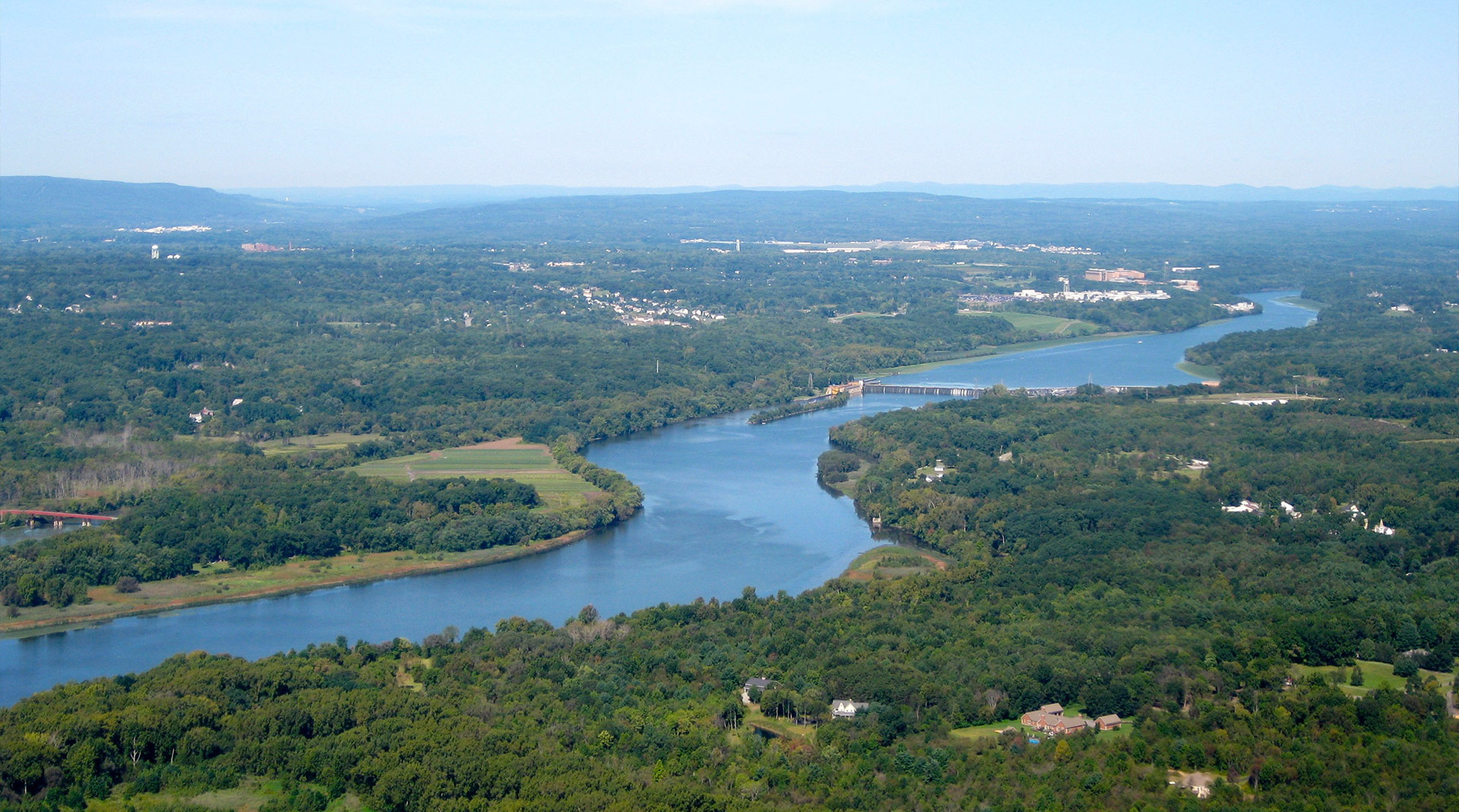
That question has shaped recent work led by John Garver, PhD, Professor of Geology at Union College in Schenectady, NY. His research group has been investigating water quality in the lower Mohawk River watershed, with a focus on the connection between surface water contamination and municipal drinking water.
Surface water networks integrate PFAS inputs from numerous upstream sources and distribute them throughout larger river systems.
The Mohawk River watershed flows into waters that influence downstream drinking water supplies. Cities like Schenectady, Amsterdam, Cohoes, and Rotterdam have been affected among the most in the area.
The Capital District of New York has several known or suspected PFAS hot spots. To locate and track down these PFAS/PFOA’s, it can be done in multiple ways, most effectively by Mass Spectrometry (MS). This method is proven to be highly sensitive, able to detect these chemicals in parts-per-trillion (ppt).
A Watershed with Multiple PFAS Sources
Garver’s team has identified PFAS signals much higher than the EPA’s Maximum Containment Levels (MCL). These spikes are associated with landfill leachate, wastewater effluent, industrial sites, and airport drainage areas where AFFF use has contributed to contamination. Some streams show clear point-source signatures. Others are more complicated, reflecting diffuse inputs and groundwater interactions that can blur the surface water signal.
The region’s awareness of PFOA was heightened by severe groundwater contamination documented near Hoosick Falls in 2014, primarily sourced from a Teflon manufacturing plant.
PFAS drew additional attention during the 2017 to 2018 relicensing and proposed expansion of the Colonie Landfill. This landfill sits alongside the Mohawk River and upstream of the municipal drinking water intake for the City of Cohoes. One of Garver’s students, Shae Fontaine, a major in Geosciences, was particularly interested in PFAS in municipal water because her family lives in Cohoes. Sampling by municipalities and Riverkeepers during this time found elevated PFOA in landfill outfalls.
Nearby airports add another layer of concern. The Albany International Airport and Schenectady County Airport both have Air National Guard operations with documented groundwater and surface water contamination linked to AFFF. According to Garver, streams draining the Schenectady airport area show a legacy PFAS signature dominated by PFOS, while streams draining the Albany airport suggest a mix of legacy and more modern AFFF-related compounds. Some of these legacy compounds found include C8 Fluro-surfactants like PFOS and PFOA, while modern compounds include PFHxS and PFHxA.
Why Union College Chose Cyclopure’s Water Test Kit Pro
PFAS contamination of the Mohawk River watershed was acknowledged, but public data on surface streams, and their role in transporting PFAS to the Mohawk River, remained limited.
“So that’s what we set out to document,” Garver says.
Garver first learned about Cyclopure’s water test kits through a colleague at Union College, who had used the technique with a student to study the lower Mohawk River and Hudson River in 2024.
The appeal was practical and scientific: lower cost, accurate analytical capability, and fast turnaround.
Today, the research group uses Cyclopure’s Water Test Kit Pro to analyze PFAS in surface water, municipal drinking water, and outfall discharges.
For field researchers, instead of treating PFAS sampling as an expensive one-off event, teams can use the Water Test Kit Pro to build a more complete picture across multiple locations, source areas, and hydrologic conditions.
From Testing to Source Tracing
Before using Cyclopure, Garver’s group was not conducting PFAS measurements. The test kits opened a new line of research.
“Cyclopure water test kits have opened up a range of new research opportunities for our group,” Garver says.
The team began by documenting PFAS concentrations in surface streams in the lower Mohawk River watershed and has expanded into upstream source tracing.
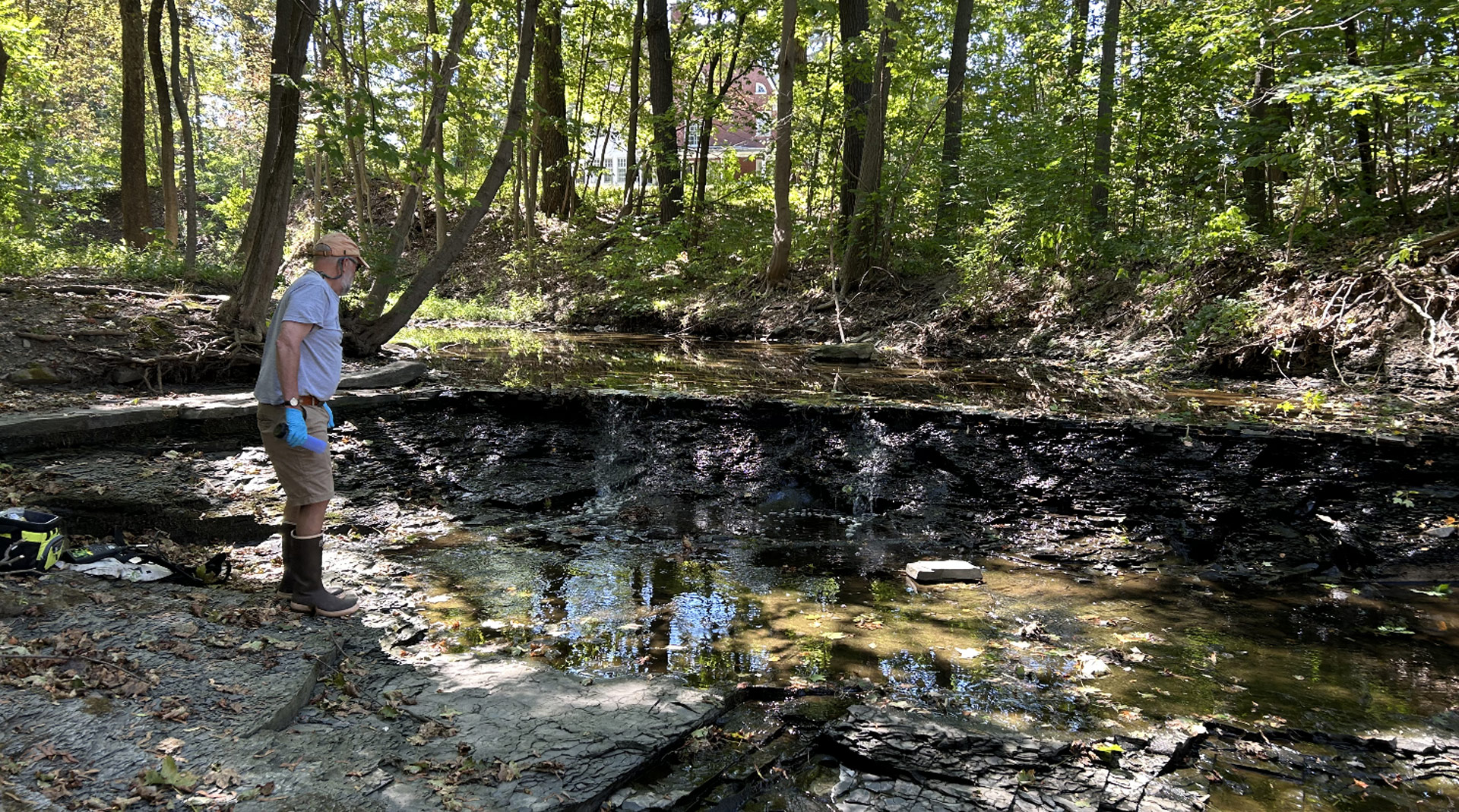
That approach is straightforward in concept: identify a contaminated stream, move upstream, sample strategically, and look for changes in PFAS concentration and compound signature. In practice, it requires field discipline and a sampling method that can be deployed across many sites.
Garver’s team also uses a multiparameter probe at sample locations. In their study area, specific conductance has been linked to PFAS concentration at many sites, making it a useful companion measurement during field investigations.
Community Interest Is Growing
The science is technical, but the public interest is simple.
People want to understand how PFAS enters water supplies and what can be done about it.
Garver says his team has been struck by the level of community interest in the findings. That interest is emerging at the same time regulatory frameworks are beginning to take shape for landfill leachate management, wastewater treatment, and source control.
Large-scale remediation will take time. But better monitoring can begin now.
By making PFAS testing more practical for field research, tools like Cyclopure’s Water Test Kit Pro help researchers document contamination patterns, identify likely sources, and support more informed decisions.
In the lower Mohawk River watershed, the work is still unfolding.