
How Riverkeepers Are Using PFAS Test Kits to Monitor Waterways Across the United States
Riverkeepers have long served as advocates for local waterways across the United States. Many organizations began decades ago in response to pollution, industrial dumping, and threats to drinking water, fisheries, and recreation.
Over time, their role has evolved into a combination of science, education, community engagement, and environmental protection.
Today, Riverkeeper organizations monitor water quality, investigate contamination concerns, work directly with local communities, and push for accountability when waterways are threatened. Because they are deeply connected to the rivers and communities they serve, they are often among the first groups to investigate emerging contaminants like PFAS.
As awareness of PFAS contamination has grown, Riverkeepers have expanded their efforts to better understand where these compounds are appearing, how they move through watersheds, and what that means for nearby residents. Testing has become an important part of that work.
A National Starting Point
In 2022, Waterkeeper Alliance partnered with Cyclopure to launch a large-scale PFAS testing project. More than 100 Waterkeeper organizations participated, collecting samples across 114 watersheds throughout the United States.
For many groups, this was the first time they could test for PFAS at a large scale without relying entirely on expensive lab workflows that required shipping large quantities of water for analysis. The project helped demonstrate that PFAS contamination is a widespread issue affecting waterways across the country, not isolated to only a few regions.
The initiative also showed how accessible testing could help organizations gather more data, engage communities, and identify areas requiring additional investigation.
From One Study to Ongoing Monitoring
After the national study, many Riverkeepers continued testing. Why? Because regular monitoring provides a clearer understanding of how PFAS contamination changes over time.
Traditional laboratory testing remains an important part of PFAS analysis, but cost and logistics can limit how often organizations are able to sample. For groups responsible for monitoring large watersheds, those limitations matter.
Cyclopure’s PFAS test kit offers a different approach. The test uses DEXSORB®, a PFAS-selective adsorbent engineered to capture PFAS at the molecular level. The test uses a DEXSORB-loaded extraction disc to capture PFAS during collection, allowing for field-based extraction and simplifying sampling without compromising data quality.
Cyclopure’s Water Test Kit Pro tests 55 PFAS analytes including all 40 EPA Method 1633 compounds and uses analytical methods validated to EPA 533, 537, and 1633 requirements.
This format makes large-scale watershed monitoring more practical for environmental organizations that need repeat testing across many locations.
How Riverkeepers Are Using Cyclopure’s PFAS Testing Across the U.S.
Alabama: Building a Clearer Picture Over Time
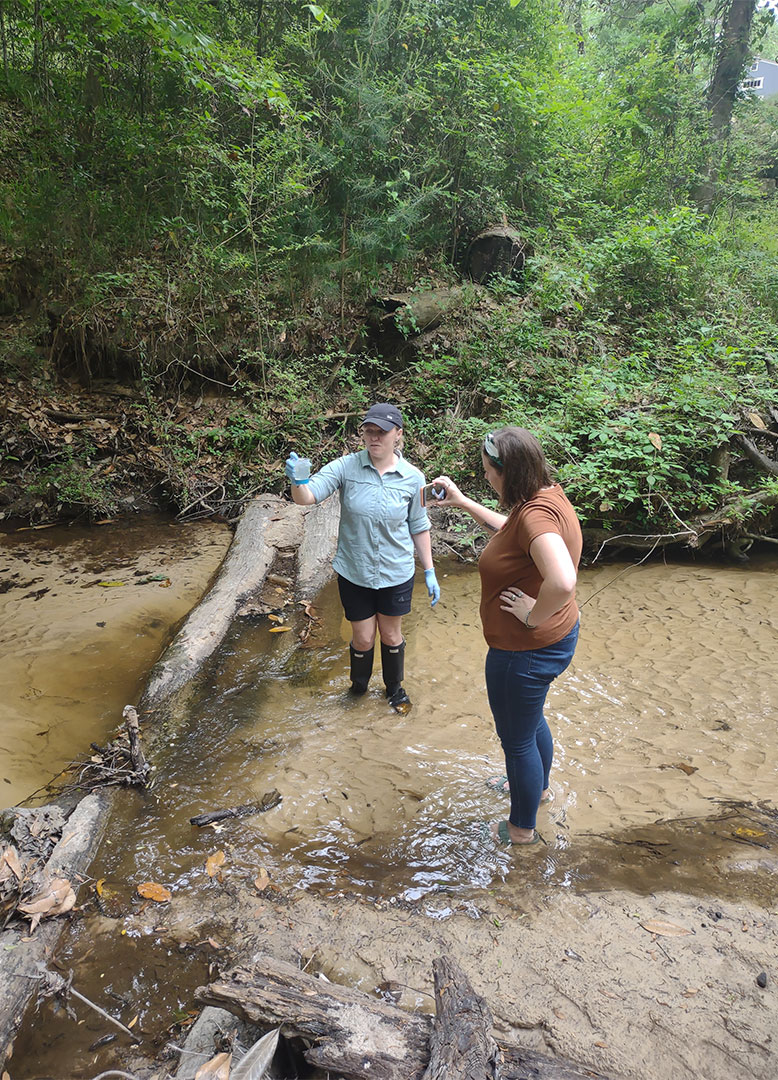
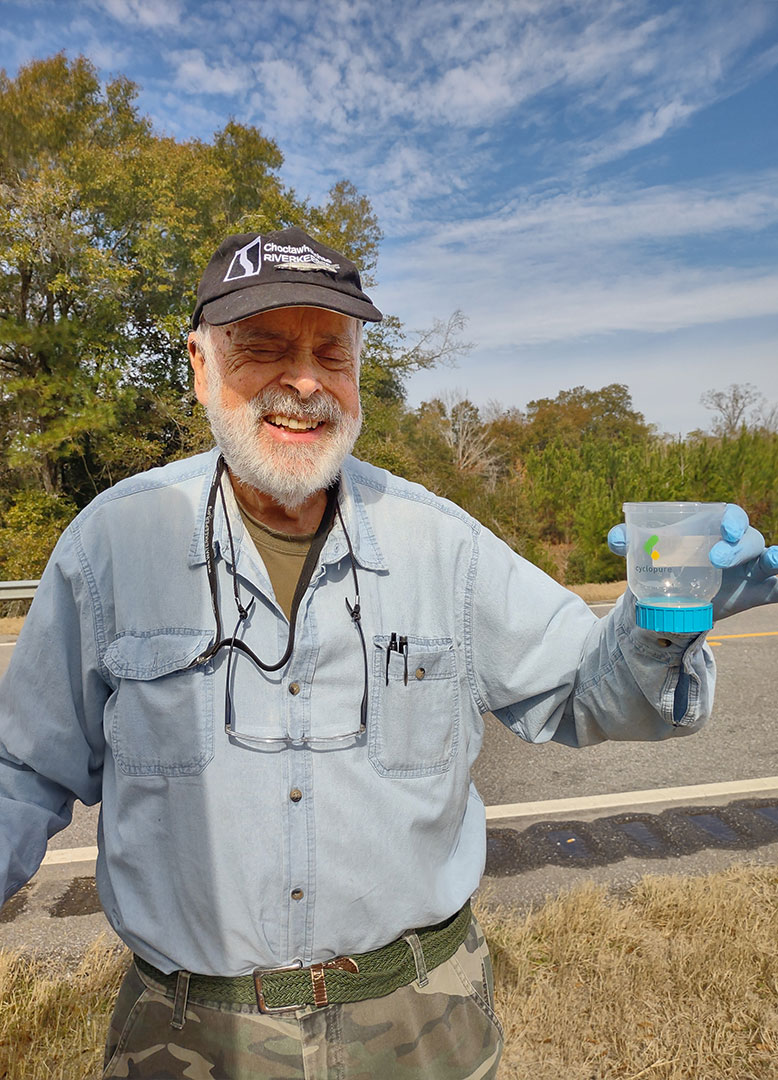
For Choctawhatchee Riverkeeper, the focus has been on building a deeper understanding of local waterways through long-term monitoring.
Their team places strong emphasis on consistent data collection over time. Using Cyclopure’s PFAS test kit in the field helped make that possible at a more manageable cost.
“The Cyclopure team has gone beyond the call of duty numerous times, making good products even better.”
— Michael Mullen, Choctawhatchee Riverkeeper
The value is not just in a single result. It is in the ability to return, test again, and better understand trends within the watershed over time.
Georgia: Scaling PFAS Testing Across a Watershed
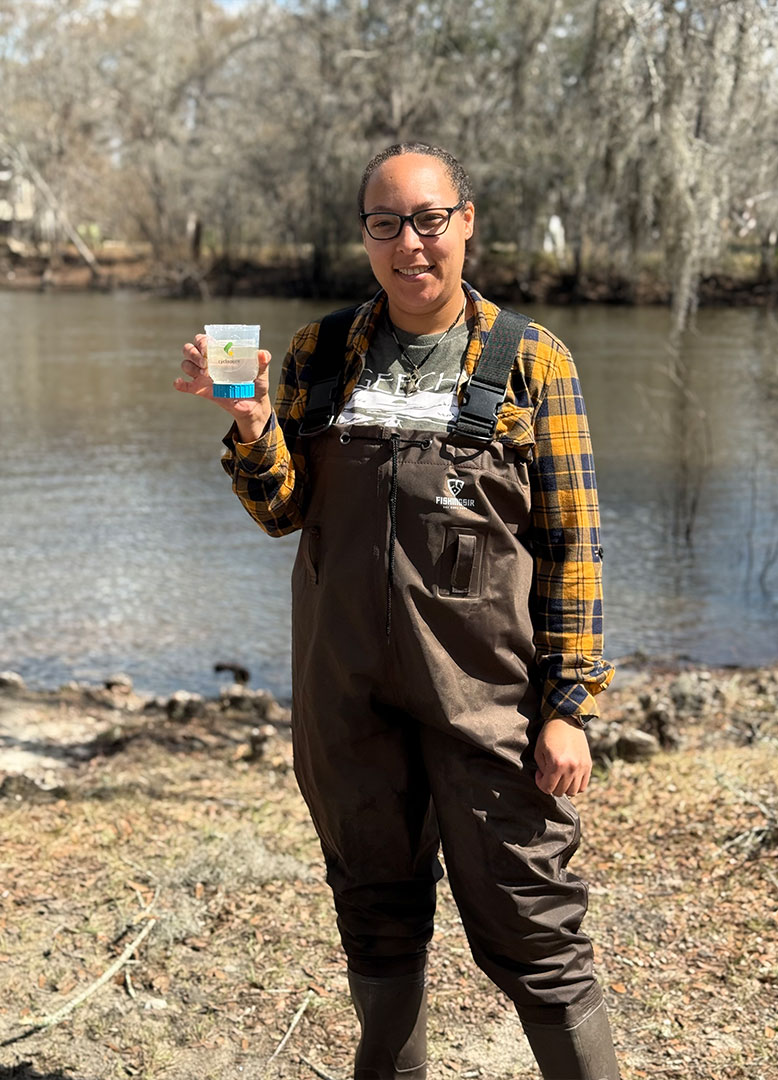
For Ogeechee Riverkeeper, the challenge was scale.
PFAS testing existed, but costs limited how frequently testing could be performed and how many locations could be included.
“We were really restricted before. Now we’re able to ramp up our monitoring efforts.”
— Damon Mullis, Ogeechee Riverkeeper
Lower testing costs allow for more sampling locations and more frequent monitoring. That shift from limited testing to scalable testing can significantly improve how organizations evaluate contamination patterns and prioritize response efforts.
Tennessee: A Screening Tool for Faster Decisions
In Tennessee, PFAS testing often begins with a straightforward question:
Is there something here worth investigating further?
Barry Sulkin, a scientist working with Tennessee Riverkeeper and other organizations, uses PFAS testing as a screening tool to answer that question quickly.
“Sometimes I simply want to know, is this potentially a PFAS contamination situation?”
For screening and early-stage investigations, accessible testing provides an important starting point for additional action and follow-up sampling.
Why Accessible PFAS Testing Matters
Communities affected by PFAS contamination often need answers quickly. Accessible testing helps organizations identify concerns sooner, monitor waterways over time, and respond more effectively.
When testing becomes more practical and affordable, Riverkeepers and environmental groups can expand monitoring efforts beyond isolated one-time sampling events. That leads to better data, stronger community engagement, and a clearer understanding of local water quality conditions.
Cyclopure’s water test kits combine selective PFAS capture, a simple sampling process, and sensitive laboratory analysis capable of detecting PFAS down to 1 ppt. The kits have been used by homeowners, environmental groups, research institutions, and state agencies across all 50 states.
PFAS testing does not need to be complicated. It needs to be clear, reliable, and accessible.
As Riverkeepers continue protecting waterways across the country, access to scalable testing tools will remain an important part of understanding and responding to PFAS contamination.
