

Roughly 43 million people in the United States drink water from a private well. Private wells are not covered by federal utility monitoring mandates, though state and federal programs increasingly offer assistance. For instance, Cyclopure partnered with the Colorado Department of Public Health and Environment under a 5-year contract to test private wells across the state. Whether through a government-funded initiative or independent sampling, the decision to test ultimately begins with you.
Why Private Well PFAS Testing Sits Outside Federal Drinking Water Rules
The Safe Drinking Water Act regulates public water systems. It does not reach private wells.
In April 2024, the EPA finalized enforceable limits of 4.0 parts per trillion for PFOA and PFOS in drinking water. Public utilities must complete initial monitoring by 2027, and while treatment compliance was originally set for 2029, a compliance deadline extension until 2031 is currently being proposed.
Those requirements stop where the public system ends. A homeowner on a well has no monitoring schedule, no compliance date, and no violation notice. Several states, including Colorado and Michigan, have run testing programs for well users. Coverage is uneven, and plenty of households never qualify.
How PFAS Reaches Groundwater and Wells
PFAS do not break down easily in soil or water. They travel with groundwater and can persist for decades. Understanding how these compounds move through a watershed explains why a well can be affected far from the source.
Not every well behaves the same way. Depth, local geology, well construction, and distance from a release all change the picture. Two neighbors can get different results.
Conditions that tend to raise risk include:
- Proximity to airports, military installations, or fire training sites where firefighting foam was used
- A downgradient position from a landfill, industrial facility, or wastewater treatment plant
- Farmland where biosolids have been applied
- Shallow wells drawing from unconfined aquifers
- Known detections in nearby wells or in a neighboring public supply
Contamination is especially well mapped in states like New Jersey, Pennsylvania, Michigan, North Carolina, and Massachusetts. The absence of a map pin does not mean the absence of PFAS. Often it just means nobody has sampled yet.
What Has Changed in Private Well PFAS Testing
Standard PFAS testing still requires a burdensome courier-style process. Most commercial labs demand that you collect water in specialized bottles, pack them in ice, and ship them overnight--with total costs typically running between $400 and $800 per sample. Because of these steep prices and logistical hurdles, some private well owners simply skip testing altogether.
Point-of-collection extraction transformed this workflow, a breakthrough pioneered by Cyclopure through its proprietary DEXSORB® technology. With Cyclopure’s DEXSORB® process, water passes through a small cup containing an adsorbent-loaded disc that binds PFAS at the moment of sampling. Only the cup returns to the lab, completely eliminating the need to ship heavy water samples.
That single change lowers cost and removes handling risk. It also preserves the sample in its actual field condition. Analysis at the lab stays conventional, using liquid chromatography with tandem mass spectrometry and isotope dilution.
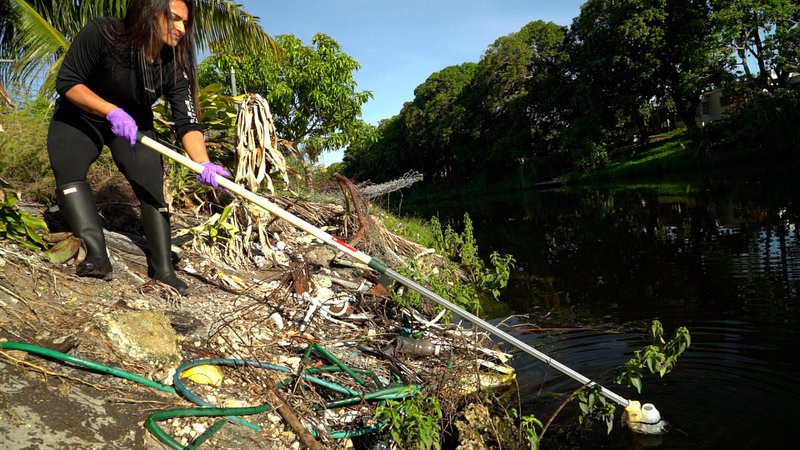
One detail matters here. EPA certification requires a fixed workflow that includes shipping water and extracting PFAS inside the lab. Extraction at the point of collection falls outside that defined process, even when the analytics follow EPA method requirements. State agencies in Michigan and Massachusetts have compared this approach against certified lab results and found close agreement. If a state program or legal matter requires a certified test, ask before you sample.
Reading Your Results While the Regulations Shift
Interpretation is where many well owners get stuck. Two terms drive most of the confusion.
An MCL is the enforceable limit. An MCLG is the health-based goal, set without regard to cost or feasibility. For PFOA and PFOS, the MCLG is zero while the MCL is 4.0 ppt. A result of 3 ppt sits below the enforceable limit and above the goal at once.
The rules keep moving as well. In May 2026, EPA proposed keeping the 4.0 ppt limits while offering systems two more years to comply, extending the final exemption deadline from 2029 to 2031. A second proposal would rescind federal limits for PFHxS, PFNA, GenX chemicals, and the hazard index. Many states maintain their own standards regardless. A number that looks fine federally may still exceed a state limit.
When your report arrives, look for:
- Which specific analytes were detected, not only a combined PFAS total
- The lab's limit of quantification, since a non-detect at 20 ppt differs greatly from one at 1 ppt
- Whether your state sets limits that differ from federal values
- Whether the sample was taken before or after any existing treatment
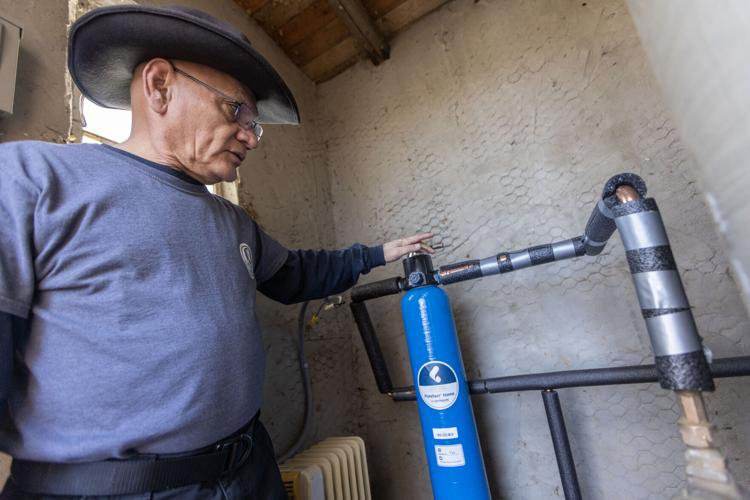
Cyclopure built its Water Test Kit Pro around this reality. The lab reports 55 PFAS analytes, including all 40 compounds in EPA Method 1633, down to 1.0 part per trillion. Return shipping within the USA is pre-paid. Results arrive in a plain-language report within 10 to 14 business days of the kit reaching the lab. If treatment turns out to be the right move, Purefast® home filtration offers a next step. The same DEXSORB® adsorbent chemistry removes PFAS at the tap or across a whole house.
Your Well, Your Numbers, Your Call
You do not need a chemistry background to handle this well. You need one accurate baseline and a report you can actually read. Test once, see where you stand, and decide from there. Questions about your numbers or the right filtration path are worth asking before you spend anything on treatment. Order a test kit or talk with our team about what your well water is telling you.