

Testing your own drinking water for PFAS sounds simple until you start comparing options. One kit screens for a dozen compounds. Another screens for more than fifty. Prices range from under $100 to several hundred dollars. Choosing a PFAS home test kit gets easier once you know which details actually change your results. Four factors matter most. Coverage, collection method, detection limits, and interpretation all shape what you learn.
What a PFAS Home Test Kit Actually Measures
PFAS is not one chemical. It is a family of thousands of synthetic compounds used in nonstick coatings, firefighting foam, and stain-resistant textiles. No consumer test covers every one of them. Each kit picks a list of analytes, and that list is the first thing to check.
Older testing panels focused on long-chain compounds like PFOA and PFOS. Manufacturers have since shifted toward short-chain replacements such as PFBA, PFBS, and GenX. A narrow panel can return a clean-looking report while those short-chain compounds go unmeasured.
Before you buy, look closely at the analyte list:
- How many individual compounds appear on the final report
- Whether the panel includes the compounds covered under EPA Method 1633
- Are short-chain PFAS included, not just PFOA and PFOS?
- Whether results are itemized by compound or lumped into one total number
A kit that reports 55 individual PFAS analytes tells you considerably more than one reporting a single combined figure.
How Sample Collection Using PFAS Home Test Kit Affects Your Results
Most laboratory tests ask you to fill bottles and ship the water. That water needs careful handling. Hold times, temperature, and cross-contamination all affect the outcome. PFAS turn up in everyday items. Cosmetics, food wrappers, and some waterproof fabrics can transfer trace amounts during collection. Shipping water also adds weight, cost, and delay.
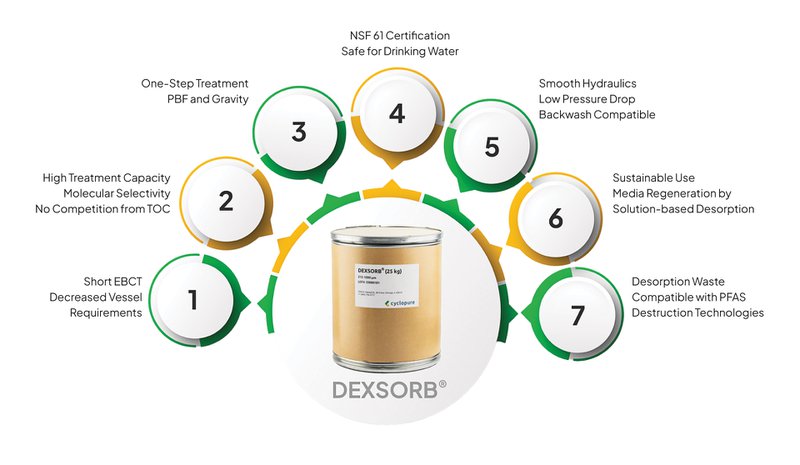
A newer approach takes water shipping out of the equation entirely. Your sample passes through an extraction disc at the moment of collection, PFAS bind to a cyclodextrin-based adsorbent inside that disc, and only the small collection cup travels to the lab. The result is a snapshot of your water exactly as it was at the tap.
The practical differences add up. No cold packs, leaking bottles, or heavy parcels.
Detection Limits, Lab Methods, and Certification
PFAS are measured in parts per trillion, written as ppt or ng/L. That is an extraordinarily small amount. Labs differ in how low they can reliably quantify, and that threshold is called the limit of quantification.
The number deserves your attention. Suppose a lab reports down to 4 ppt and the federal limit for PFOA is also 4 ppt. A "non-detect" then tells you very little. Quantification down to 1.0 ppt gives a much clearer answer.
Ask which instrumentation the lab uses, too. Credible PFAS analysis relies on high-performance liquid chromatography with tandem mass spectrometry, paired with isotope dilution, where mass-labeled standards are added to each sample to keep quantification accurate.
Certification is a separate question worth understanding. EPA certification requires labs to follow a fixed workflow that includes collecting and shipping water, then performing the extraction inside the lab. Kits that extract PFAS at the point of collection sit outside that defined process. Independent agencies have examined how the two approaches compare.
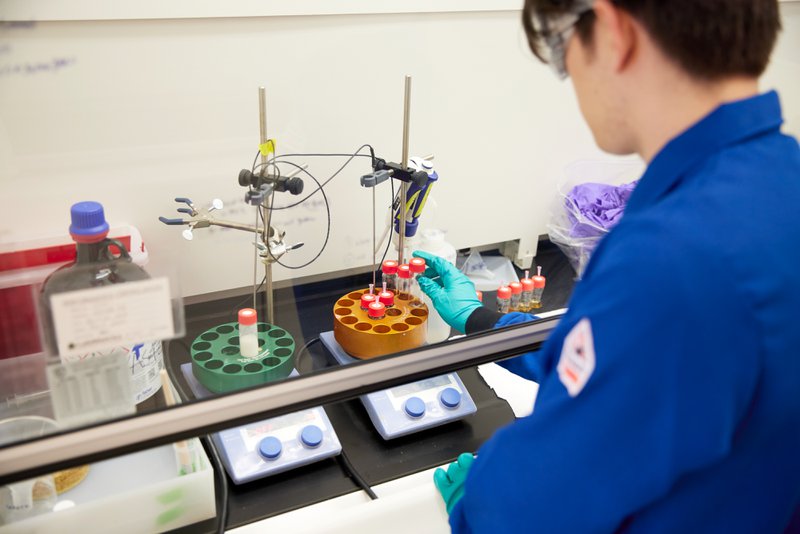
Michigan's MPART study found good comparability between results, typically within a few parts per trillion, and a MassDEP review supported the kit's value as a trustworthy screening tool. You can read both case studies here. If you need results for a legal or regulatory proceeding, use a certified lab. For understanding your own household water, a screening test usually answers the question.
Making Sense of Results as EPA Rules Shift
This is where many homeowners get stuck, and honestly, it is the hardest part. Two acronyms explain most of the confusion.
An MCL is a Maximum Contaminant Level. It is the enforceable legal limit for a public water system. An MCLG is a Maximum Contaminant Level Goal. It is a non-enforceable health-based target set without regard to cost or feasibility. For PFOA and PFOS, EPA set the MCLG at zero.
The rules themselves keep moving. EPA finalized enforceable limits for six PFAS in April 2024, requiring compliance by April 2029. In May 2026, the agency proposed two changes. One would extend the PFOA and PFOS compliance deadline to 2031. The other would rescind the limits for PFHxS, PFNA, HFPO-DA, and Hazard Index mixtures. The 4.0 ppt limits for PFOA and PFOS remain in place, and those proposals are not final until rulemaking concludes.
Two more points are easy to miss:
- Federal MCLs apply to public water systems. Private wells are not covered by them.
- Several states have set their own PFAS limits, and some are stricter than the federal values.
Reading your numbers against a moving target is a real challenge. A good report helps by listing current reference values right next to your results. Cyclopure's Water Test Kit report is built that way on purpose. If your results point toward treatment, PFAS filtration options for the home are the sensible next thing to review.
Test First, Then Decide
You cannot filter what you have not measured. We built our Water Test Kit to be accurate, affordable, and easy to use, without asking you to ship a drop of water. You fill the cup, let it drain, and mail the cup back with prepaid return shipping inside the USA. Our team analyzes 55 PFAS analytes at our own lab, with a standard turnaround of 10 to 14 business days after your kit arrives. If PFAS show up in your report, we will help you understand what the numbers mean. Order your kit from the Cyclopure shop, or reach out to our team to talk through your results before you commit to any treatment.