

Shopping for a PFAS water test kit should be simple. In practice, the options look nothing alike. Some promise a color change in minutes. Others ship you bottles, ice packs, and a chain-of-custody form. The differences matter, because PFAS are measured in parts per trillion. Consumer test strips were never built for that range. A result you can act on depends on three things: how the sample is collected, how it is analyzed, and how low the lab can reliably measure.
Here is how to tell rigorous testing from clever packaging.
What "Lab-Grade" Really Means in a PFAS Water Test Kit
"Lab-grade" is not a regulated term. It should mean your sample moves through the same analytical chain a commercial lab uses. Three details tell you most of what you need to know.
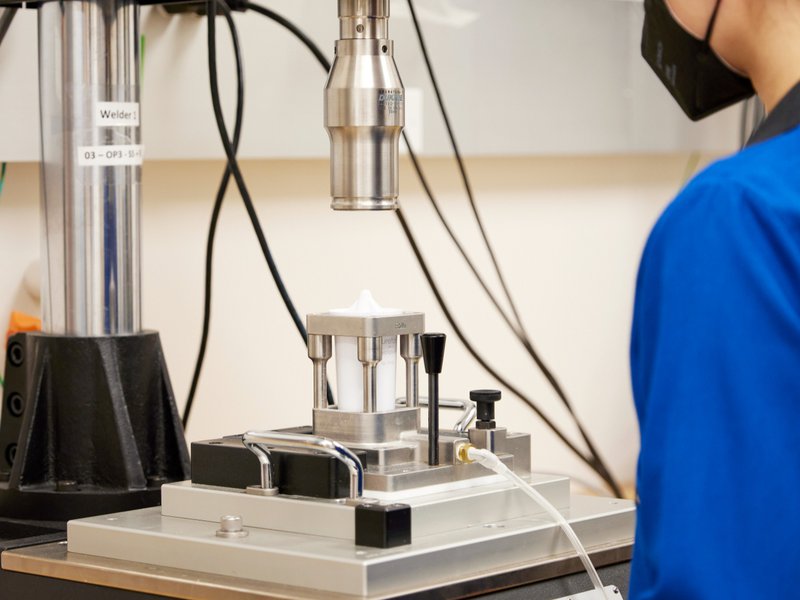
The first is instrumentation. Reliable PFAS analysis uses high-performance liquid chromatography with tandem mass spectrometry, written as HPLC-MS/MS. The second is isotope dilution, where mass-labeled PFAS standards are added to every sample. That step corrects for losses during handling and keeps quantification honest. The third is the method behind the numbers. EPA Methods 533, 537, and 1633 define calibration, internal standards, quality control, and reporting limits.
Ask about the limit of quantification, or LOQ, too. A lab reporting down to 1 part per trillion gives you far more information than one stopping at 20 ppt. It is also worth reviewing independent side-by-side lab comparisons published by state agencies.
Why the Sampling Step Decides Your Data Quality
Most labs cannot extract PFAS from your water until the water physically arrives. That single fact shapes the whole experience. You collect a liter or more, pack it carefully, and ship it. Time, temperature, and container contact all become variables.
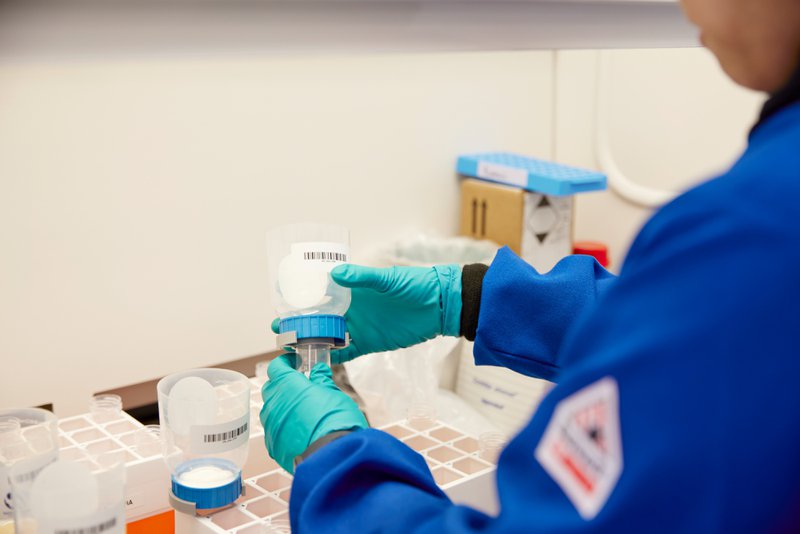
A newer approach moves extraction to your tap. Water passes through a collection cup holding an adsorbent disc, which captures PFAS on the spot. Only the cup goes to the lab. The practical differences add up:
- Lighter packages and lower logistics cost, which brings the price of testing down
- A snapshot of your water in its on-site condition, captured at the moment of sampling
- No bottles to leak, break, or sit in a warm delivery truck
- No lab experience required, since collection takes a few minutes at the sink
One tradeoff deserves a plain answer. Certification programs are built around a fixed workflow, including shipment of water and extraction inside the lab. Extracting at the point of collection is more efficient, but it steps outside that defined process. A kit can therefore run certified-grade analytics without carrying the certification label. If you need a certified result for litigation or a property transaction, use a state-certified laboratory. You can find more detail in these frequently asked questions about PFAS testing.
Interpreting Your Results as EPA Rules Keep Changing
Getting a number is the easy part. Deciding what it means is harder, and the goalposts have moved more than once.
Two acronyms cause most of the confusion. An MCL is the enforceable limit for a contaminant in public drinking water. An MCLG is the non-enforceable, health-based goal. For PFOA and PFOS, the MCL is 4 parts per trillion and the MCLG is zero. A result of 3 ppt therefore sits below the legal limit and above the health goal at the same time. That is not a contradiction, but it does require explanation.
The rules themselves are in motion. On May 18, 2026, EPA announced two proposed rules for public comment. One upholds the PFOA and PFOS standards while letting systems request two more years, to 2031, to comply. The other would rescind the drinking water regulations for PFHxS, PFNA, HFPO-DA, and the Hazard Index mixture of those three plus PFBS. Several states maintain their own enforceable limits regardless of federal action. The same number can mean different things in New Jersey than in Ohio. Private wells sit outside all of it, since federal drinking water rules apply to public systems only. Anyone comparing filtration options should keep that context in mind.
What to Look for in a PFAS Water Test Kit
Run through a short checklist before you order:
- Analyte coverage. How many PFAS are measured, and does the list include the compounds in EPA Method 1633?
- Detection floor. What is the LOQ in parts per trillion?
- Method validation. Are the analytics validated to recognized EPA methods, with isotope dilution and documented quality control?
- Turnaround and inclusions. How long after the lab receives your sample, and is return shipping covered?
- Report clarity. Will you receive numbers you can actually read and compare?
The Water Test Kit Pro from Cyclopure was designed around these questions. Its lab measures 55 PFAS analytes, including all 40 compounds covered under EPA Method 1633, at an LOQ of 1.0 ppt. DEXSORB®, a renewable cyclodextrin adsorbent, captures PFAS inside the collection cup, so no water ships anywhere. The kit is accurate, affordable, and easy to use, with pre-paid return shipping within the USA. Results follow a 10 to 14 business day turnaround after the lab receives your kit, and more than 35,000 samples across all 50 states have moved through the same workflow.
Start With a Number You Can Trust
You cannot filter what you have never measured. Testing gives you a baseline, a record you can revisit, and a reason to act or to relax. If the report comes back clean, you have documentation. If it does not, you know which compounds are present and at what concentration. That turns the filtration conversation into a technical decision instead of a guess. Order your test kit from the shop, or contact our team to talk through what your results mean for your household.