
Uncertainty about your drinking water is hard to live with. A PFAS test kit replaces that uncertainty with real numbers. Not every kit answers the same question, though. Some panels cover a handful of compounds. Others measure dozens at parts-per-trillion levels. Some kits ask you to ship bottles of water to a distant lab. Newer ones capture PFAS before the sample ever leaves your kitchen. Knowing how these options differ helps you choose the right test the first time.
What a PFAS Test Kit Actually Measures
PFAS is not a single chemical. The family includes thousands of compounds with different structures and behaviors. That variety matters for testing. A kit that reports only PFOA and PFOS tells you very little about the rest.
Laboratory methods define the panel. EPA Method 1633 covers 40 PFAS compounds. EPA Methods 533 and 537.1 are drinking water methods with narrower lists. Short-chain compounds like PFBA and PFBS are often missing from older analyte lists.
Reporting limits matter just as much as panel size. A non-detect at 20 parts per trillion differs from a non-detect at 1 part per trillion. The lower the quantification limit, the more confidence a clean result carries. Most frequently asked questions about PFAS testing come back to these two details.
Before ordering, check four things:
- The number of analytes, and whether all 40 EPA Method 1633 compounds are included
- The limit of quantification, stated in parts per trillion
- Whether short-chain PFAS appear on the analyte list
- Which EPA method the lab validates its work against
How Sample Collection With A PFAS Test Kit Changes Cost and Convenience
Two collection models dominate the market. The first is traditional bottle shipment. A lab mails you sample bottles. You fill them, pack them, and ship the water back. Water is heavy, so shipping costs climb quickly. Some programs also require cold packs and tight hold times.
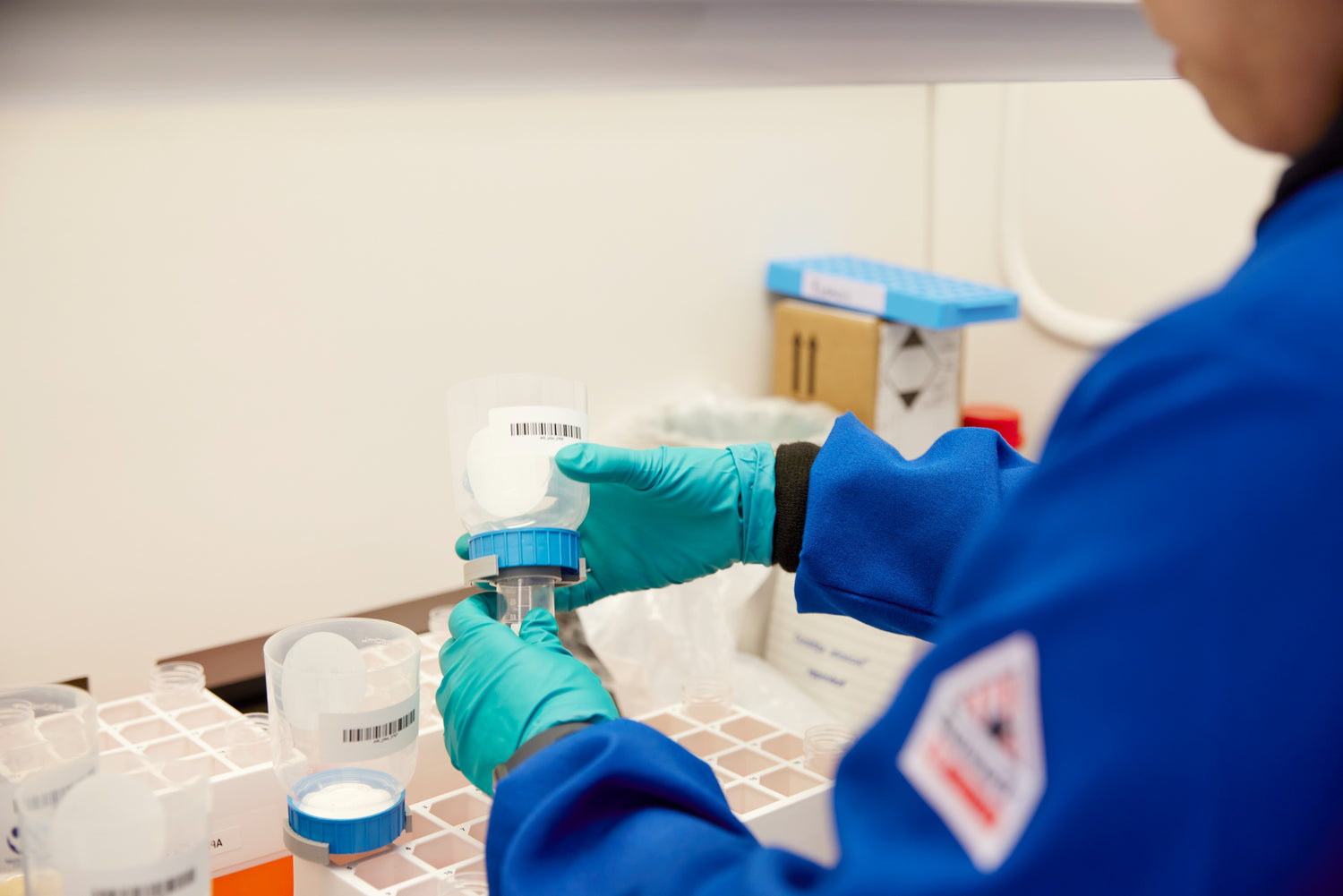
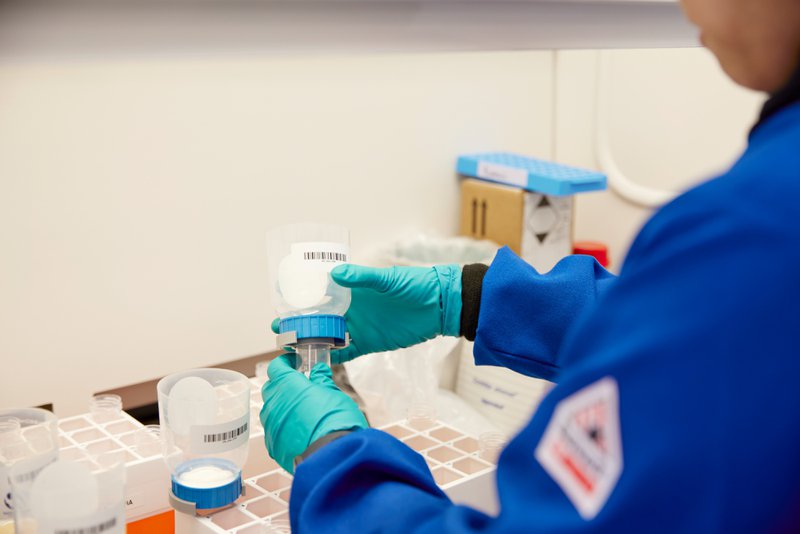
The second model extracts PFAS at the moment of sampling. A sorbent-loaded disc sits inside a collection cup. You pour water through the cup and let it drain. PFAS bind to the adsorbent, and the water goes down your drain. Only the small cup travels back to the lab.
That change removes a lot of friction. Nothing sloshes, nothing leaks, and nothing needs cold shipping. Because the sample is preserved at the exact moment of collection, this streamlined approach has expanded well beyond home use. It is now relied on by community volunteer groups, academic institutions, state agencies, and Department of Defense initiatives to systematically map PFAS across entire watersheds, public lands, and military installations.
Why Interpreting Results Is Harder Than Reading a Number
Getting a report is one thing. Knowing what it means is another. Federal PFAS rules are in motion right now, and the benchmarks keep moving.
EPA finalized the first national PFAS drinking water regulation in April 2024. It set enforceable maximum contaminant levels, or MCLs, for six PFAS, along with non-enforceable, health-based maximum contaminant level goals, or MCLGs. The MCLs for PFOA and PFOS were each set at 4.0 parts per trillion.In May 2026, EPA proposed rescinding the limits for PFHxS, PFNA, GenX chemicals, and the hazard index mixture.
A second proposal would push the PFOA and PFOS compliance deadline from 2029 to 2031, leaving the 4 ppt limits themselves unchanged. The comment period closed in July 2026, so neither proposal is final.
Keep these distinctions in mind when you read a report:
- MCL: the enforceable federal limit, which applies to public water systems
- MCLG: the health-based goal, with no enforcement attached
- State standards: several states set their own PFAS limits, and some are stricter
- Private wells: federal drinking water limits do not cover them at all
Local context helps too. Understanding how PFAS travel through a watershed explains why neighbors sometimes get different results.
What to Look for Before You Order a Kit
Start with one question: do you need a certified test? EPA certification depends on a fixed workflow, including shipment of water and extraction performed inside the lab. Kits that extract PFAS at the point of collection sit outside that defined process. For litigation or regulatory filings, use a certified lab. For understanding your own water, an accurate and affordable screening test usually does the job.
Cyclopure built its Water Test Kit Pro around that second use case. Development was funded by the National Institute of Environmental Health Sciences. The kit uses a DEXSORB® extraction disc to capture PFAS during sampling, so no water ships anywhere. Prepaid return shipping is included within the USA. Results arrive 10 to 14 business days after the kit reaches the lab.
The analysis itself follows standard laboratory practice. Cyclopure's lab uses HPLC-MS/MS with isotope dilution, validated to the requirements of EPA Methods 533, 537, and 1633. The panel covers 55 analytes, including all 40 compounds in Method 1633, quantified down to 1.0 part per trillion. Independent reviews in Michigan and Massachusetts compared those results against state and commercial labs. You can read the full case studies yourself.
Turn Your Question Into a Number You Can Act On
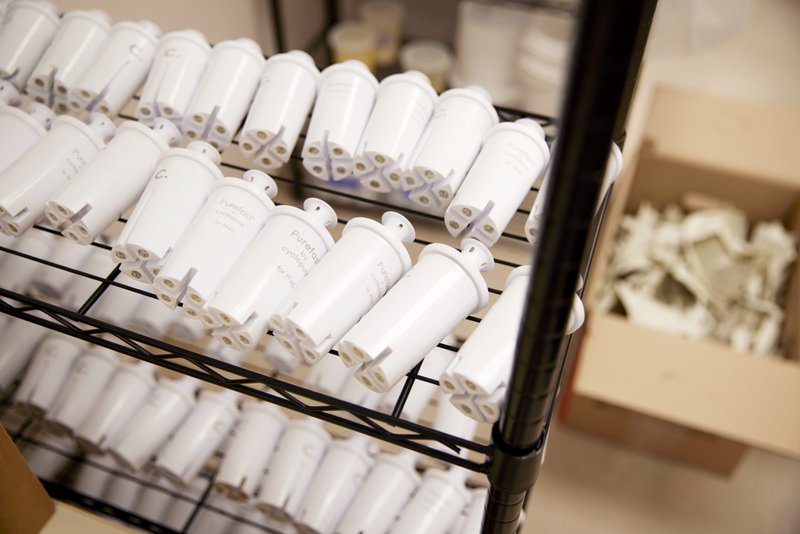
You should not have to guess about the water coming out of your tap. One sample gives you a baseline, and a baseline gives you options. If your results come back clean, you can note the date and retest later. If PFAS show up, you can compare filtration choices with real numbers in hand. That includes Purefast® systems built on the same DEXSORB® adsorbent used in the test kit. Order your PFAS test kit from the Cyclopure shop, or contact our team to talk through your options.