

Your private well gives you independence, but it also makes you the one responsible for the water your household drinks. Public water systems are legally required to test regularly for contaminants, including PFAS under the EPA's 2024 rule. However, private wells aren't covered by that law, so there's no outside entity testing your water on a schedule. Testing is entirely up to you as the well owner, with only a couple of narrow exceptions: New Jersey has required PFOA, PFOS, and PFNA testing at the sale or lease of any home with a private well since 2021, and Maine now requires landlords with private wells to test for PFAS every five years and disclose the results to tenants. Outside of situations like these, understanding PFAS in well water starts with knowing where the chemicals come from and how you find and remove them.
Our team of materials chemists and environmental engineers spends every day studying how PFAS behave in water. We also have families, gardens, and pets, so we understand the questions you bring to your kitchen tap. Here is what you should know about testing, regulations, and whole-home filtration for your private well.
What Private Well Owners Should Know About PFAS in Well Water
PFAS in well water go undetected unless you test, since the chemicals have no taste, smell, or color. Federal drinking water rules do not cover private wells, so you decide when to test and how to treat. A whole-home PFAS filter paired with regular testing lets you protect water at every tap in your home.
Where PFAS in Well Water Come From
PFAS enter groundwater from many sources, and the mix of compounds varies from one well to the next. Common sources include firefighting foam, industrial discharges, landfills, and biosolids spread on farm fields as fertilizer. Once the chemicals reach the soil, rain and irrigation can carry them down into the aquifer your well draws from.
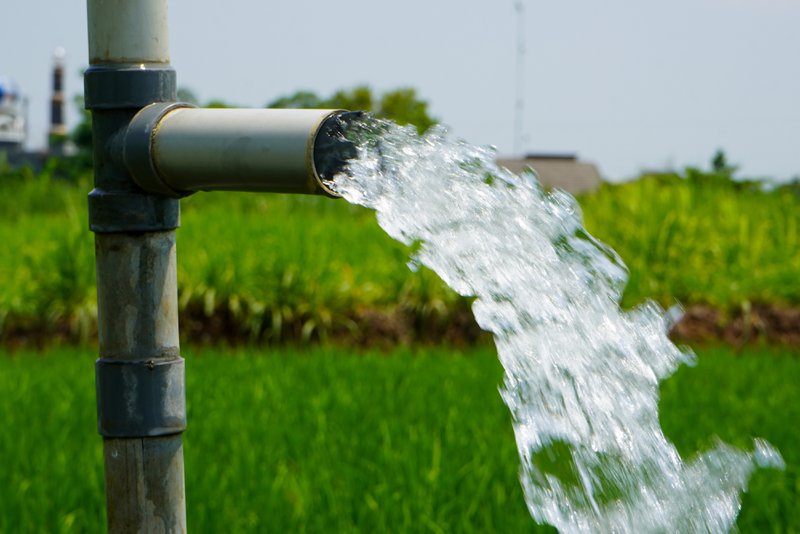
According to a study by the U.S. Geological Survey (USGS), PFAS concentrations were similar between private wells and public supplies. Researchers also found the chemicals more often near urban areas and potential sources like airports and wastewater treatment plants. In other words, living far from a city does not guarantee your well is free of PFAS. NPR
PFAS in well water also differ by chain length, which shapes how each compound moves and how you remove it. Short-chain PFAS tend to travel farther in groundwater and can be harder for some filter media to capture. For that reason, a test that reports a broad range of compounds gives you a clearer picture.
Every well sits in its own geology, so results from a neighbor cannot tell you what is in your water. Testing your own tap remains the only way to know your starting point before choosing any treatment.
Why Private Wells Need Their Own Testing Plan
The Environmental Protection Agency (EPA) set separate 4 parts per trillion (ppt) limits for two PFAS in public drinking water. The two compounds are perfluorooctanoic acid (PFOA) and perfluorooctane sulfonic acid (PFOS), among the most studied PFAS. However, the limits apply only to public water systems, which leaves you in charge of your own well water. Proposed PFOA and PFOS Compliance Extension Rule | US EPA +2
Instead of waiting for a mandate, you can build a testing plan around a few practical checkpoints. Our environmental engineers recommend testing PFAS in well water at each of the following moments.
- Before you buy a home with a well, so you know the water quality from the start.
- After nearby land use changes, such as new construction, farming activity, or a landfill expansion.
- Before choosing a filter, since your results show which compounds and levels the system must handle.
- After installing treatment, so you can confirm the filter performs as expected in your home.
Some states go further, and New Jersey requires testing for certain PFAS in private wells before owners sell their homes. For household screening, the Cyclopure Water Test Kit Pro reports 55 PFAS analytes down to 1.0 ppt. Because the kit captures PFAS on a disc at your tap, you mail back only a small sample cup. ScienceDirect
Choosing a Whole-Home Filter for PFAS in Well Water
A whole-home filter treats water where it enters your house, so every faucet, shower, and appliance gets filtered water. The media inside the vessel matters most, because different adsorbents capture PFAS in different ways. Every Purefast® Home system uses DEXSORB®, the plant-based adsorbent our chemists developed specifically for PFAS removal.
DEXSORB® uses molecular selectivity to target PFAS, and it leaves fluoride and healthy mineral ions in your water. In fact, the residential vessels hold the same industrial-grade DEXSORB® media used in large-scale treatment.
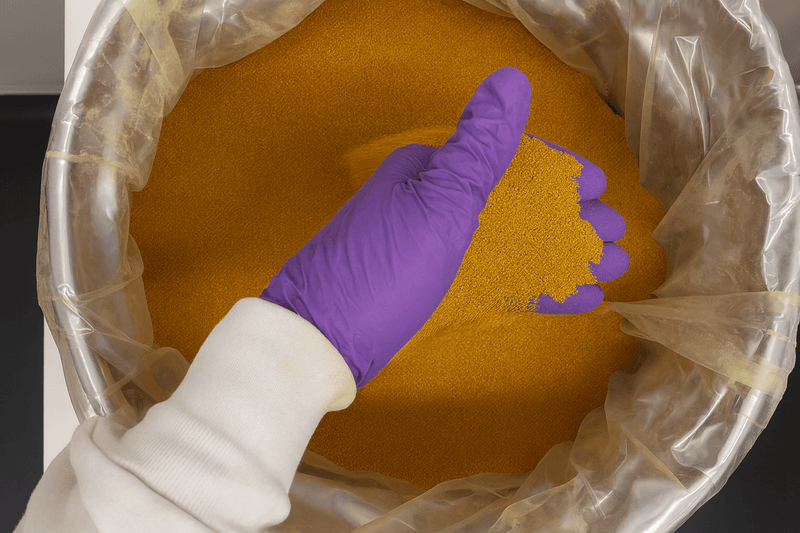
Capacity also matters, since a larger vessel treats more water before you need a replacement. The Purefast® Home80 treats 80,000 gallons, which covers roughly one year of typical household use. Meanwhile, the Purefast® HomeXtreme treats 160,000 gallons and runs about two years between replacements.
Testing shows our Home filters remove eight PFAS to non-detect levels, including PFOA, PFOS, and GenX. Still, performance depends on your water chemistry, so a follow-up test confirms the system is working as intended. When a vessel reaches capacity, our Used Filter Return Program sends captured PFAS toward separation and destruction.
Choosing the right system for PFAS in well water depends on your test results and household water demand. Our team can walk you through your results and help you match vessel size to your household.
Protect Your Well Water With Cyclopure
You now have a clear plan for PFAS in your well, from understanding sources to choosing the right filter. Testing your tap gives you real data, and a whole-home DEXSORB® system turns that data into action. Regular follow-up testing then keeps you informed as your household and surrounding land use change over time.
Our materials chemists and environmental engineers developed DEXSORB® and designed Purefast® to make PFAS removal practical for private well owners. Whether you need a first test or a filter sized for your home, we can help you choose with confidence. Reach out to the Cyclopure team today to start protecting every tap in your home.