
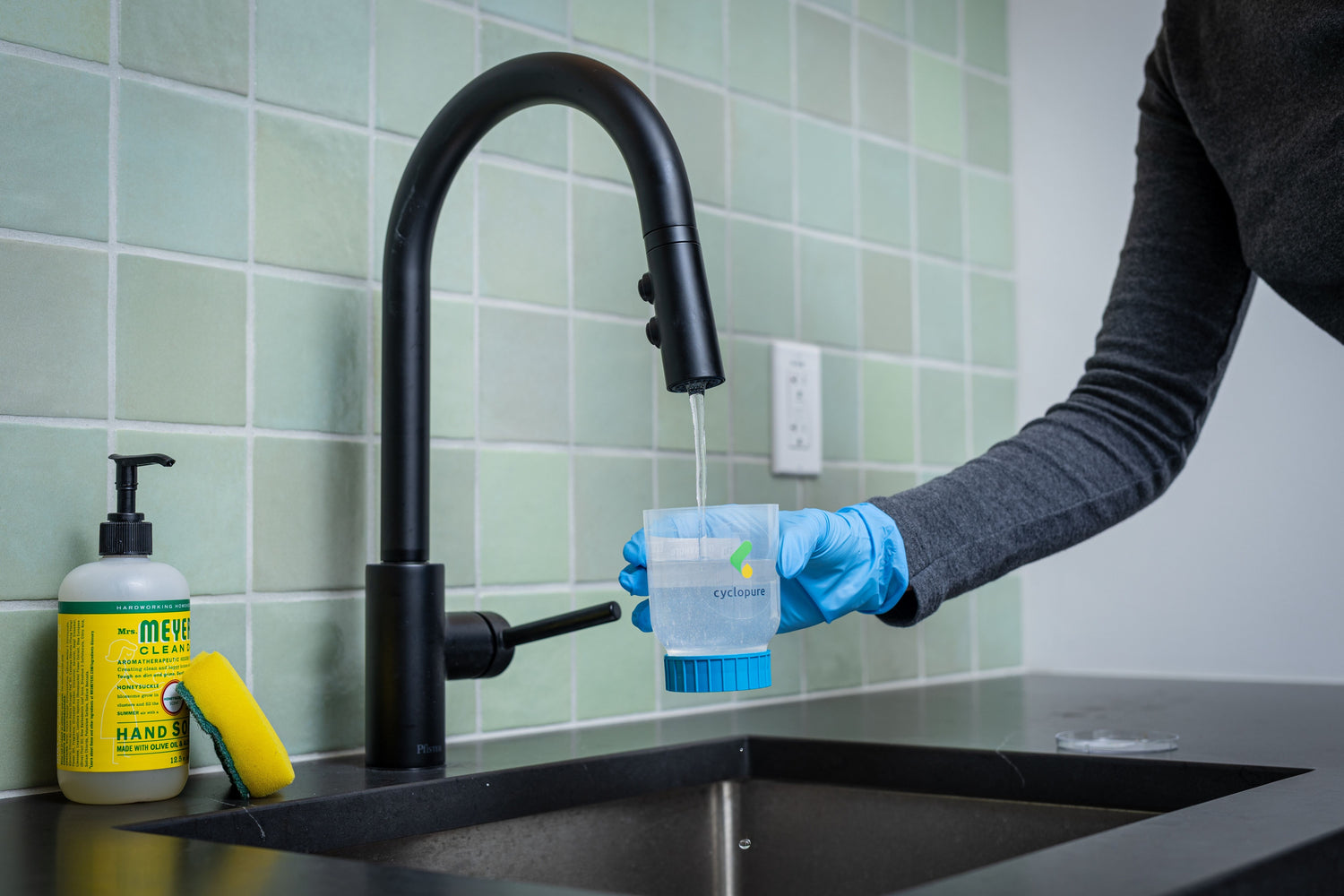
Water can look clear, taste fine, and still carry per- and polyfluoroalkyl substances. That is why PFAS water testing has become the standard first step for households and water systems alike. These compounds are measured in parts per trillion. At that scale, you cannot see, smell, or taste a problem. A laboratory result is the only reliable way to know what is in your water. Understanding how that result gets produced matters as much as the number itself.
What PFAS Water Testing Actually Measures
PFAS is not one chemical. It is a family of thousands of synthetic compounds built around strong carbon-fluorine bonds. Any test reports only what it was designed to look for. The analyte list is therefore the first thing to check on a quote or a report.
Most laboratories run one of three EPA analytical methods. Method 537.1 and Method 533 apply to drinking water. Method 533 was developed to capture short-chain PFAS that older methods often missed. Method 1633 covers 40 compounds across water, soil, and other matrices.
The second number worth checking is the reporting limit, also called the level of quantification. A "non-detect" only means nothing was found above that limit. A lab quantifying down to 1 part per trillion gives you a sharper picture than one stopping at 4. Field sampling across river systems shows how much concentrations can vary from one location to the next.
PFAS Water Testing: Why Sample Collection Is the Biggest Variable
Analysis gets most of the attention. Collection deserves more of it. At parts-per-trillion levels, what happens between the tap and the instrument can shape the result.
The conventional workflow has stayed the same for years. A newer approach changes the first step instead of the analysis:
- Ship the water. Fill bottles at the tap, keep them cold, and ship the water to a lab for extraction.
- Extract at the tap. Pass water through a cup holding an adsorbent-loaded disc. The disc captures PFAS on site, and only the cup travels to the lab.
The second approach removes water from the shipping equation. That cuts logistics cost and preserves the sample in its on-site condition. Community groups monitoring rivers and streams have used this method to sample sites far from any laboratory.
One tradeoff comes with that efficiency. Certification programs are written around a fixed workflow. That workflow assumes water is shipped and extracted inside the lab. A method that extracts at the point of collection sits outside that path. The analytical steps themselves can still be identical.
Interpreting Results as EPA Rules Keep Shifting
Getting a number back is easier than knowing what to do with it. Federal rules use two values, and they are often confused:
- MCL (Maximum Contaminant Level). The enforceable limit a public water system must meet.
- MCLG (Maximum Contaminant Level Goal). A non-enforceable health-based goal, set at zero for PFOA and PFOS.
That gap explains a lot of the confusion. A result of 3 parts per trillion falls below the federal MCL and above the MCLG. Both readings are correct. They simply answer different questions.
The regulatory picture is also moving. EPA finalized limits for six PFAS in April 2024, including 4 parts per trillion for PFOA and PFOS. In May 2026, the agency proposed two changes. One would let systems request two extra years, shifting compliance from 2029 to 2031. The other would rescind limits for PFHxS, PFNA, GenX, and the Hazard Index mixture. Both remain proposals, so the 2024 limits are still in effect.
Two more points often get missed. Federal MCLs apply to public water systems, not private wells. Some states also set their own limits, which can be stricter than the federal ones. Independent state comparisons of testing methods can help you judge how much confidence to place in a given result.
What Homeowners and Utilities Each Need From a Test
Homeowners usually want three answers. Is PFAS present, at what level, and does it warrant filtration? Private well owners carry that question alone, since no federal rule requires them to test.
Utilities and municipalities work on two tracks. Compliance monitoring runs through state-certified labs on a fixed schedule. Screening is different work. Well outreach programs, source-water mapping, and post-filter verification all need volume, speed, and a workable price.
Cyclopure designed its Water Test Kit Pro with both audiences in mind. A DEXSORB®-loaded extraction disc captures PFAS at the moment of sampling, so no water ships to the lab. Analysis runs on HPLC-MS/MS with isotope dilution, validated to the requirements of EPA Methods 533, 537, and 1633. The lab reports 55 analytes, including all 40 Method 1633 compounds, down to 1 part per trillion. Prepaid return shipping is included within the USA. Standard turnaround is 10 to 14 business days after the kit reaches the lab.
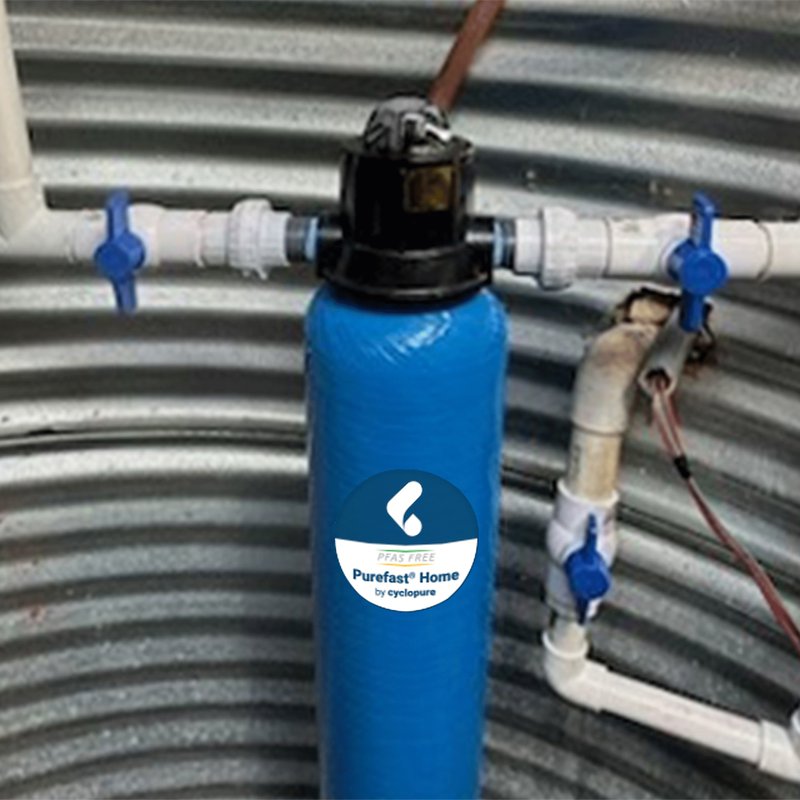
Being direct about one detail matters. The test is not NSF/ANSI 53 certified, and the collection step is the reason rather than the analysis. If your situation calls for a certified test, a state-certified lab is the right route. More than 35,000 samples from all 50 states have run through the lab so far. That includes work with state agencies, research institutions, and environmental organizations. When results point toward treatment, DEXSORB® also powers Purefast® filtration for homes built for larger flows.
Find Out What Is in Your Water
You do not need a science background to get a real answer. Order a kit from the shop, fill the collection cup, and mail it back with the prepaid label. Your report tells you which PFAS are present and at what concentration. From there, you can decide whether to monitor, filter, or retest. Maybe you run a utility, a well outreach program, or a community screening effort instead. Our materials scientists and environmental engineers are glad to talk through volume testing and treatment options. Contact us to build a PFAS testing plan that fits your water.