
A whole house filter treats water where it enters your home, catching per- and polyfluoroalkyl substances (PFAS) before any tap. Whether you need one for PFAS depends on your test results, your household, and your budget. State testing programs can help answer that question and, in some states, help cover the cost.
Cyclopure’s materials scientists and environmental engineers designed Purefast® Home systems for private well owners weighing this exact decision. We also know a whole house system is a real investment, so the choice deserves clear facts. Here is how to tell when whole house treatment makes sense and when a countertop filter may be enough.
Do I Need a Whole House Filter for Well Water PFAS?
You need to filter your water when PFAS levels exceed EPA's health-based limits. EPA has linked PFAS exposure to health effects including reduced immune response, interference with hormones, increased cholesterol and a higher risk of some cancers. If only drinking and cooking water concern you, a countertop filter may cover your needs for now. Either way, a test through your state program or a home kit gives you the numbers to decide.
What Your Test Results Say About Filter Needs
Your test results come first, since the right treatment depends on which PFAS your well contains and at what levels. PFAS private well testing programs in states like New York and New Hampshire test eligible wells at no cost. If your state has no program, our Water Test Kit Pro screens 55 PFAS analytes at the point of collection.
If results come back non-detect, keep testing on a regular schedule. Any detection is worth a closer look, since EPA’s health goal for PFOA and PFOS is zero. However, results at or above state standards point toward treatment, and state health officials often weigh in. In Michigan, for example, health officials advise bottled or filtered water for drinking, cooking, formula, and brushing teeth when needed.
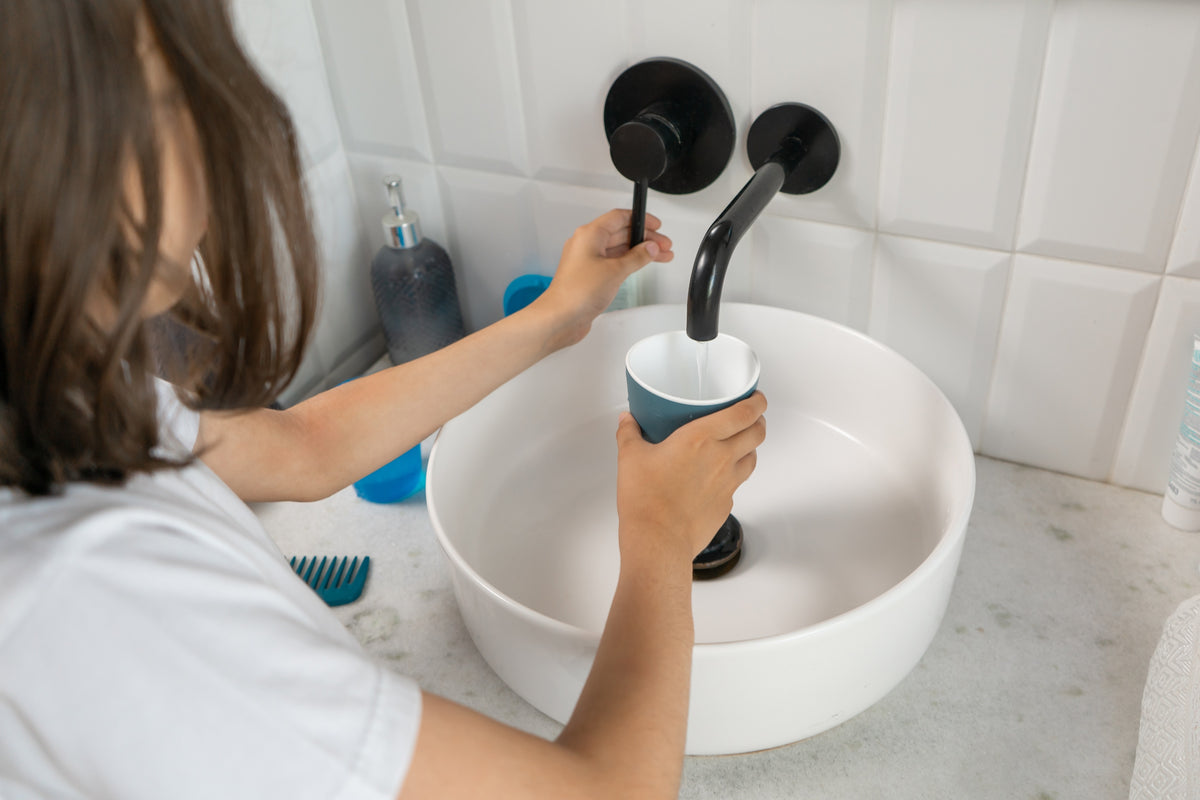
Brushing teeth happens at bathroom sinks, so a single kitchen filter can leave gaps in coverage. Meanwhile, the same guidance notes you can bathe, wash dishes, and do laundry with your well water.
A whole house filter makes the most sense when your household drinks or brushes teeth at several taps. It also removes the need to remember which faucet is filtered, which matters for kids and guests. For smaller households with one main drinking tap, a Purefast® Countertop filter may be a practical starting point.
How DEXSORB® Differs From Carbon in Whole House Filters
Most whole house PFAS filters use an adsorbent, a material that grabs PFAS as water flows through the vessel. For decades, the standard choice has been activated carbon, which performs well on many legacy contaminants but struggles with emerging PFAS compounds, including many of the shorter-chain variants now showing up in water supplies. In contrast, DEXSORB® is a beta-cyclodextrin polymer made from a derivative of corn and potato starch that our scientists engineered with molecular selectivity specifically for PFAS, emerging compounds included.
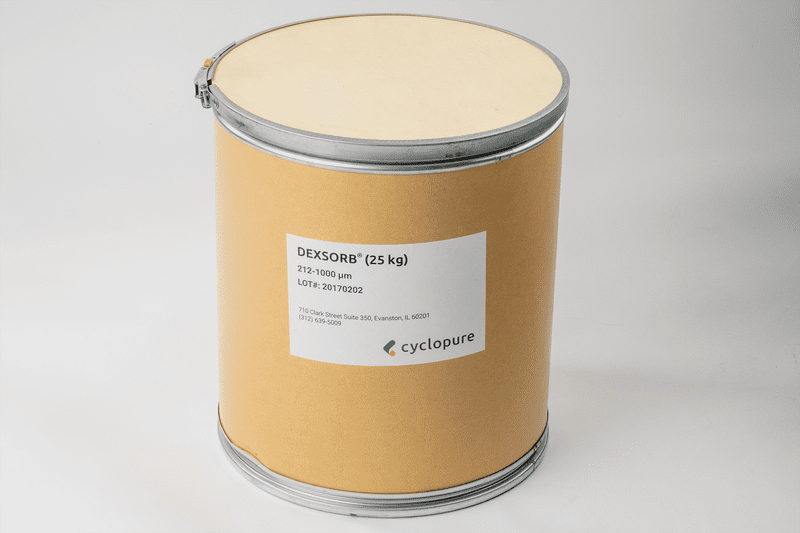
Selectivity matters, because media that captures everything can use up its capacity on compounds you are not targeting. Our Purefast® Home filters removed eight PFAS to non-detect levels in testing: PFOA, PFOS, PFHxS, PFBS, PFNA, PFDA, PFHpA and GenX, including shorter-chain compounds.
Carbon can work for PFAS, but its performance depends on chain length, water chemistry, and maintenance. According to a Duke study, many activated carbon filters showed variable PFAS removal, with short-chain compounds proving harder to capture. The same study found some whole house carbon systems delivered water with higher PFAS levels than the water entering them.
In other words, the old promise of "set it and forget it" no longer holds up for PFAS. Every adsorbent eventually fills up, so you need a clear gallon rating and a replacement schedule you can follow. Pairing that rating with regular testing lets you confirm the filter still works.
State Programs That Help Pay for Treatment
Whole house treatment costs more than a countertop filter, but several states now help offset that expense. Most rebates require results at or above state standards, so your test report becomes part of the application. Here is how current PFAS private well testing programs support treatment costs for eligible homeowners.
- New York's 2026 pilot offers rebates up to $5,000 for whole house systems in participating counties.
- New Hampshire offers a one-time rebate up to $5,000 for point-of-entry or point-of-use PFAS treatment.
- In North Carolina, a Chemours consent order provides filtration at no cost to eligible homes, and a March 2025 expansion extended the eligible area to ten counties around the Fayetteville Works plant.
Rebate programs often ask for receipts, equipment specifications, and post-installation lab results, so keep every document. Some programs also require the filter to carry NSF/ANSI certification. NSF has not yet updated its residential PFAS standard to reflect the newest regulations, and Cyclopure plans to pursue certification for Purefast® Home systems once it does. Because funding, eligibility and certification rules vary and can change, check your state agency’s requirements before you buy.
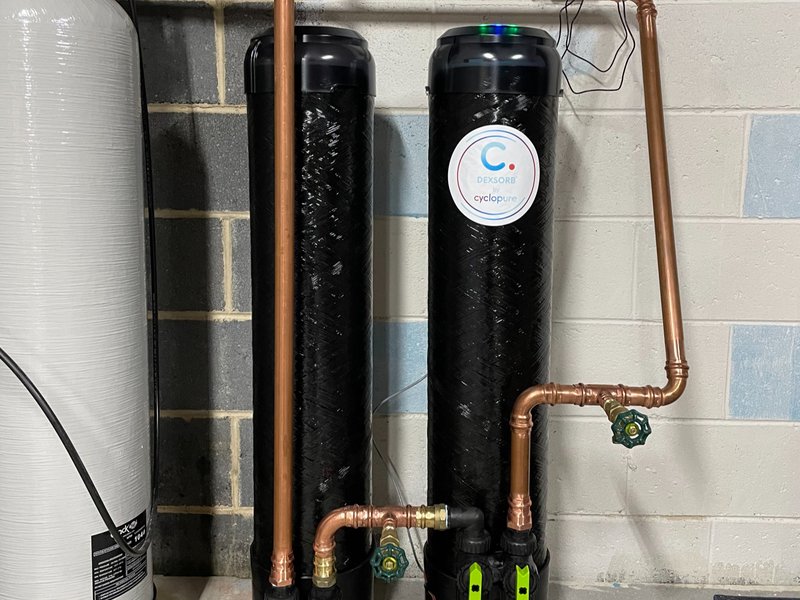
The Purefast® Home80 treats 80,000 gallons, while the HomeXtreme treats 160,000 gallons for higher-use households. Capacity is a general guide, since media life depends on flow rate and PFAS levels. A smaller home with very high readings may still call for the HomeXtreme, because the extra contact time with DEXSORB® handles the heavier load. A local plumber can install either vessel where water enters your home, and our team can help with sizing.
Choose the Right PFAS Filter With Cyclopure
A whole house filter makes sense when your results call for treatment and you want protection at every tap. A countertop filter can cover drinking and cooking water when needs are smaller or while you plan a larger system. Either way, choose media built for PFAS and follow a clear replacement schedule backed by regular testing.
Our materials scientists, environmental engineers and analytical chemists developed DEXSORB® and designed Purefast® Home systems around DEXSORB® so well owners get selective, reliable PFAS removal. Whether you need a whole house vessel or a countertop filter, we can help you match treatment to your results. Talk with our team today to find out which Purefast® system fits your well.