

Per- and polyfluoroalkyl substances (PFAS) showing up in your well results can feel like a lot to process at once. A positive result means well water contamination testing did its job and gave you the facts you need. From here, a clear sequence of steps helps you protect your household without guessing at what comes next.
Our materials chemists and environmental engineers help well owners interpret PFAS results and plan their next moves. We also have families, gardens, and pets, so we understand why a positive result feels personal. Here is a practical action plan, from confirming your numbers to choosing treatment and planning future tests.
Next Steps After Positive Well Water Contamination Testing
Start by switching to bottled or filtered water for drinking and cooking right away. Next, share your results with your state health department, which may offer guidance or support programs. Finally, install PFAS treatment sized to your household and retest to confirm the system works.
What Your Well Water Contamination Testing Results Actually Mean
You don’t need a second round of testing to act. A well-collected sample run through a process validated to EPA Method 1633 criteria gives you a result you can trust, so the priority now is moving quickly: protect your drinking water today, notify your state agency, and start sizing a treatment system.
As you check your report, look at each compound individually instead of focusing only on the total. Compare perfluorooctanoic acid (PFOA) and perfluorooctane sulfonic acid (PFOS) against the Environmental Protection Agency (EPA) benchmarks. The EPA set a 4 parts per trillion (ppt) limit for each compound in public drinking water.
Private wells fall outside that federal rule, but many owners use the 4 ppt limits as a practical reference. Ranges on your report can appear when a smaller sample raises the lab's quantification limit, so fill the cup completely.
Our Water Test Kit Pro screens 55 PFAS analytes down to 1.0 ppt, so the result you get is precise enough to act on right away. You mail back only the sample cup, and results arrive 10 to 14 business days after the lab receives it. Meanwhile, keep every report in one place so you can track changes over time.
Protect Your Household While You Plan Treatment
You do not need to wait for final treatment decisions to reduce your household's PFAS intake today. Drinking and cooking water matter most in the short term, since those uses account for what you swallow. Until your permanent system is running, well water contamination testing results can guide these interim steps.
- Switch to bottled water for drinking, cooking, baby formula, and pet water bowls until treatment is in place.
- Skip boiling as a fix, since heat concentrates PFAS rather than removing them from your water.
- Add a Purefast® Countertop filter, which fits pitchers that use standard-size Brita® filters and needs no plumbing.
- Note your Countertop filter's 65-gallon capacity, which lasts up to three months for a two-person household.
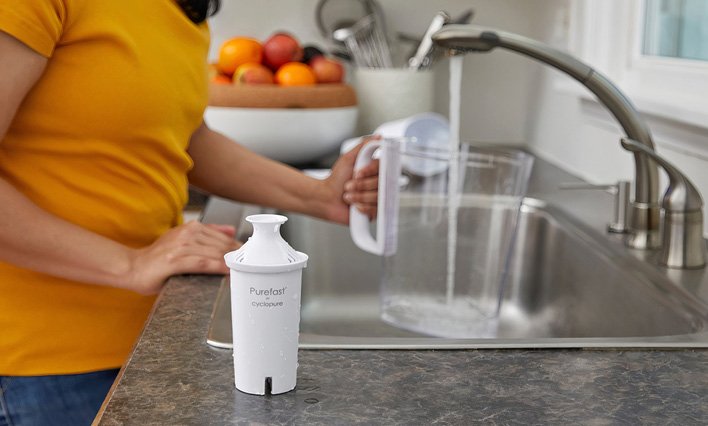
Next, share your results with your state health department or environmental agency for local guidance. Some agencies may offer follow-up sampling, and some local governments run filtration programs for affected homeowners. If you need a confirmation test or help interpreting your report, our team can walk you through the next steps directly.
If you rent, share your results with your landlord, since the property owner usually handles well treatment. Either way, keep copies of every conversation and report so decisions stay organized.
Choose Treatment and Schedule Ongoing Well Water Contamination Testing
Once you confirm your results, a whole-home filter protects every faucet, shower, and appliance in your house. Look for media designed for PFAS, published removal results, and a clear gallon rating before you buy. Every Purefast® Home system uses DEXSORB®, the plant-based adsorbent our chemists built specifically for PFAS removal.
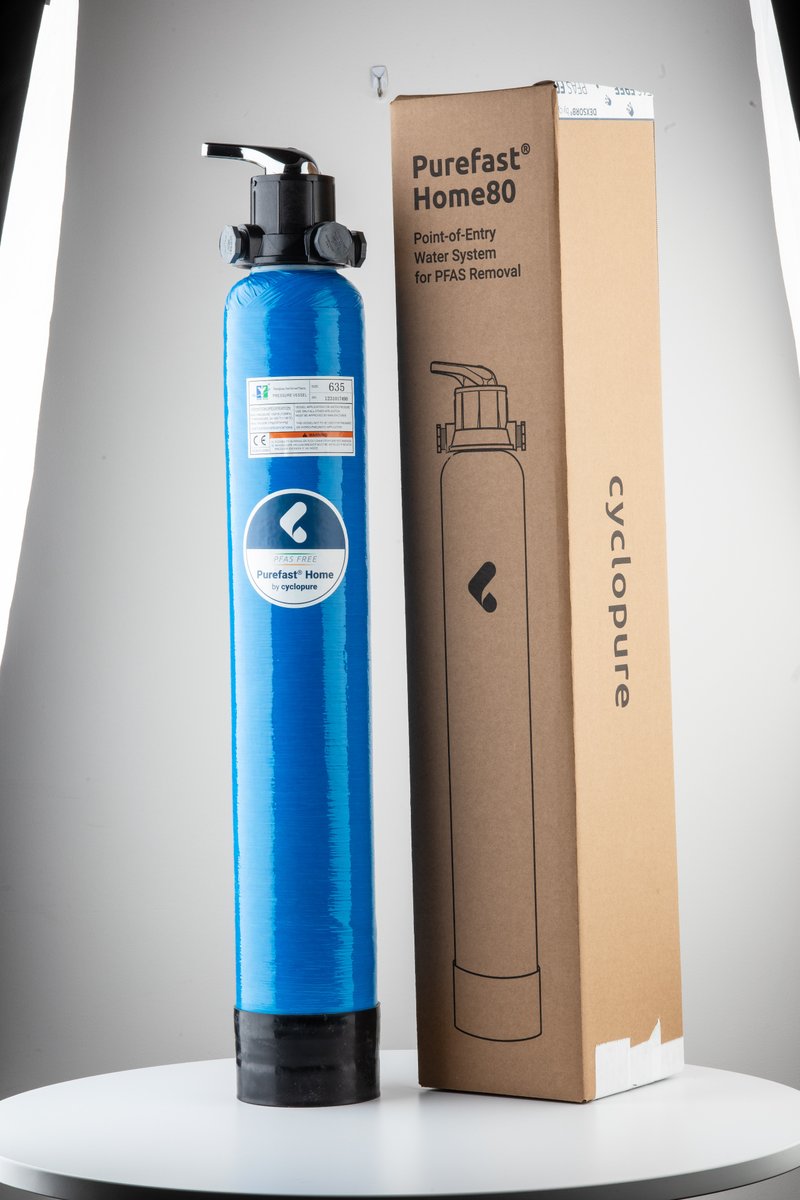
In testing, our Home filters removes PFAS to non-detect PFOA, PFOS, and GenX. The residential vessels also hold the same industrial-grade DEXSORB® media used in large-scale treatment.
Next, match capacity to your household, since the Home80 treats 80,000 gallons and the HomeXtreme treats 160,000. A local plumber can install either vessel at the point where water enters your home. After installation, well water contamination testing at the tap confirms the system performs as expected.
From there, plan an annual test to track performance as the vessel approaches its gallon rating. Also retest if nearby land use changes, since new sources can shift what reaches your aquifer.
Finally, when the vessel reaches capacity, return it through our Used Filter Return Program instead of discarding it — we cover return shipping, so there's no cost to you. We separate the captured PFAS for destruction, then regenerate the DEXSORB® media for non-residential reuse. As a result, your treatment plan covers the full life of the PFAS you remove.
Turn Your Test Results Into Action With Cyclopure
A positive PFAS result gives you a starting point, and each step from here builds on the last. Trust your numbers, protect your drinking water, notify your state agency, and choose treatment built for PFAS. Ongoing tests then show you the plan is working as your household and surroundings change.
Our materials chemists and environmental engineers designed Cyclopure testing and filtration to work together from the first sample onward. Whether you need a confirmation test or help sizing a Purefast® vessel, we can map out your next move. Call or email our team today to build a PFAS action plan around your test results.